
HOW COVID IMPRINTS THE IMMUNE SYSTEM
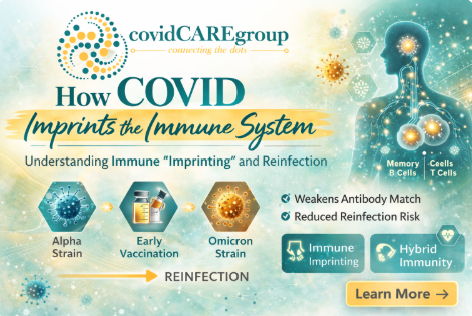
Understanding Immune “Imprinting” and Reinfection
covidCAREgroup Education Series
One of the most confusing aspects of COVID-19 has been reinfection.
Many people — especially those living with Long COVID — ask:
Why do I keep getting infected?
Why does it feel different each time?
Why does vaccination reduce severity but not always prevent infection?
Emerging research helps explain this through a concept called immune imprinting.
What Is Immune Imprinting?
Immune imprinting (sometimes called “original antigenic sin”) refers to the way your immune system prioritizes its first memory of a virus.
When you are first exposed to a virus — either through infection or vaccination — your immune system creates memory B cells and T cells that recognize that specific version (strain) of the virus.
Later, when you encounter a new variant:
• Your immune system tends to rely on that original memory
• It may respond less aggressively to new mutations
• It may not fully adapt to the updated viral structure
This does not mean your immune system is weak.
It means it is doing what it was designed to do — responding quickly using stored memory.
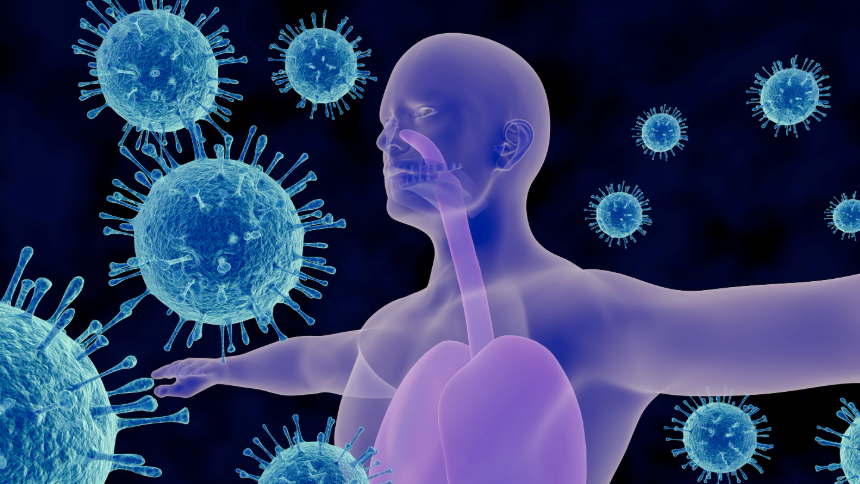
Your immune system remembers its first encounter.
That memory shapes every response that follows.
Why Reinfections Happen
SARS-CoV-2 mutates frequently. Variants such as Omicron evolved significant changes in the spike protein — the part of the virus that antibodies recognize.
If your first exposure was:
• Early pandemic strains
• Alpha or Delta variants
• First-generation vaccines
Your immune system may still preferentially recognize those earlier versions.
That can result in:
• Increased susceptibility to reinfection
• Reduced neutralizing antibody match
• Continued circulation of virus in communities
However — and this is critical — prior infection and vaccination still provide meaningful protection.
Why Reinfections Are Often Less Severe
Even if neutralizing antibodies are not a perfect match, T cells and memory B cells still provide protection against severe disease.
Research consistently shows:
• Vaccinated individuals are less likely to experience hospitalization
• Hybrid immunity (infection + vaccination) offers broader protection
• Reinfections are often milder than primary infections
This explains why many people get reinfected but avoid the severe acute outcomes seen in early 2020.
Why This Matters for Long COVID
For individuals with Long COVID, immune imprinting helps explain several realities:
• Why reinfections can still occur
• Why some people feel symptom flares after new exposures
• Why prevention still matters
• Why vaccines reduce severity but do not always eliminate risk
It also validates what many Long Haulers have reported: repeated infections can feel cumulative.
Some studies suggest reinfection may increase overall risk of long-term complications, reinforcing the importance of minimizing repeated exposures when possible.
Can Immune Imprinting Be Overcome?
Researchers are exploring ways to broaden immune response, including:
• Updated variant-specific vaccines
• Bivalent and multivalent boosters
• Mucosal (nasal) vaccines
• Universal coronavirus vaccine strategies
The goal is to stimulate immune responses that recognize conserved (stable) parts of the virus rather than only the highly mutated spike protein.
Science is evolving quickly.
What This Does Not Mean
Immune imprinting does not mean:
• Vaccines do not work
• Reinfection is harmless
• Long COVID is “just psychological”
• You are doing something wrong
It simply reflects how adaptive immunity operates under viral mutation pressure.
If you are experiencing repeated reinfections or symptom flares, your experience is biologically plausible. You are not imagining it.
Practical Takeaways
• Reinfection is possible due to viral mutation and immune imprinting
• Prior exposure still reduces severe disease risk
• Prevention strategies remain important
• Long COVID patients may benefit from minimizing reinfection risk
• Immune science continues to evolve
Final Thoughts
Understanding immune imprinting helps explain why COVID-19 continues to behave differently from many other respiratory viruses.
For the Long COVID community, this science reinforces two truths:
Reinfection risk is real.
Reduced severity does not equal zero risk.
covidCAREgroup remains committed to translating emerging science into practical understanding — connecting the dots between research and lived experience.
What support options exist for Long COVID patients?
Many individuals benefit from structured support navigating care, pacing, and recovery planning.
ProMedView offers:
✔ Chronic Illness Coaching & Advocacy
✔ Long COVID Recovery Coaching
These services focus on helping individuals regain stability, communicate with providers, and plan recovery.
Scientific Resources
• Nature News: “How immune imprinting shapes COVID immunity” (2023)
• Reynolds et al., Science — Immune imprinting and variant response
• CDC Updates on Hybrid Immunity
• WHO Technical Briefs on SARS-CoV-2 Variants
• Al-Aly et al., Nature Medicine — Reinfection risk and long-term outcomes