Women’s Menstrual Changes After COVID
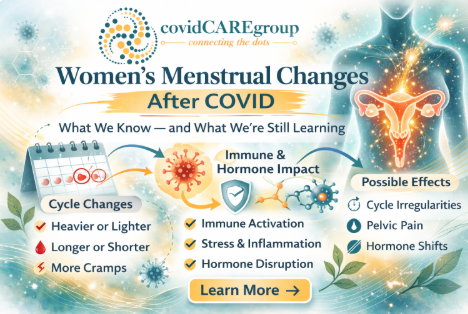
What We Know — and What We’re Still Learning
covidCAREgroup Education Series
Many women in the Long COVID community have reported changes in their menstrual cycles after infection.
Here is a recent conversation between two followers:
“My menstrual cycles have gotten very strange. I went from 4-day cycles every 26 days to now 6–8 days, sometimes twice a month, with a lot of pain and bloating, almost like what people describe as endometriosis. Does anyone know if COVID can cause endo?”
“Mine changed too. I now have more cramping, heavier bleeding for a shorter duration, and more clotting… It’s almost like my body wants to get it over with as quickly as possible.”
These experiences are not isolated. Since early in the pandemic, researchers have been studying menstrual changes after COVID infection — and after vaccination.
Let’s break down what science currently supports.
Are Menstrual Changes After COVID Real?
Yes.
Multiple studies have documented temporary menstrual cycle changes following:
• COVID-19 infection
• COVID-19 vaccination
• Significant stress or illness
Reported changes include:
• Heavier bleeding
• Shorter or longer cycles
• Increased clotting
• More intense cramping
• Mid-cycle bleeding
• Temporary skipped cycles
The menstrual cycle is highly sensitive to immune activation, stress, and inflammation — all of which occur during and after viral infection.
Can COVID Cause Endometriosis?
At this time, there is no peer-reviewed evidence showing that COVID infection or vaccination directly causes endometriosis.
However:
• COVID affects immune signaling
• It disrupts inflammatory pathways
• It can alter hormone regulation via the brain–ovarian axis
Because endometriosis is an inflammatory and hormone-responsive condition, researchers are exploring whether COVID may:
• Exacerbate pre-existing endometriosis
• Trigger symptom flares
• Increase pelvic pain temporarily
Several universities are currently researching this question, but definitive conclusions have not yet been published.
The Brain–Hormone Connection
We do know that COVID can impact:
• The hypothalamus
• The pituitary gland
• The autonomic nervous system
• Cortisol and stress pathways
The menstrual cycle depends on precise communication between the brain and ovaries (the HPO axis — hypothalamic-pituitary-ovarian axis).
When inflammation, stress, or immune activation disrupts this communication, cycle irregularities can occur.
This does not mean permanent damage, but it does explain why changes can happen.

The menstrual cycle is a vital sign and it responds to stress, inflammation, and immune activation.
Stressors can have psychical or psychological causes - anything that puts a strain on your body.
What About PTSD, Anxiety, and Endometriosis?
One of the shared articles referenced:
“In the case of catastrophes, women have a higher lifetime prevalence of PTSD, and those with endometriosis have higher anxiety levels…”
This research suggests:
• Women overall have higher lifetime PTSD prevalence
• Endometriosis is associated with higher anxiety rates
• Chronic inflammatory conditions and stress are linked
However, this does not mean endometriosis is “rooted in brain function.”
It means that inflammatory conditions and nervous system regulation are interconnected.
COVID is both an immune and neurologic stressor.
That overlap may help explain why some women experience:
• Increased pelvic pain
• Worsened PMS
• Heightened anxiety around cycles
• Changes in bleeding patterns
But correlation does not equal causation.
Does Endometriosis Increase COVID Susceptibility?
A case–control study explored whether endometriosis increases susceptibility to COVID infection.
Results did not demonstrate a strong causal link, but the topic remains under investigation.
As with many Long COVID questions, research is ongoing.
Other Possible Contributors
It’s also important to consider:
• Increased stress during the pandemic
• Sleep disruption
• Weight changes
• Changes in physical activity
• Thyroid dysfunction
• Cortisol imbalance
• Post-viral autonomic instability
All of these can affect cycles.
When to See a Doctor
Seek medical evaluation if you experience:
• Bleeding lasting longer than 8–10 days
• Soaking a pad/tampon hourly
• Severe pelvic pain
• Sudden menopause reversal
• Significant clotting
• Symptoms of anemia (fatigue, dizziness, shortness of breath)
Abnormal bleeding should never be ignored.
Final Thoughts
Menstrual changes after COVID are being reported globally.
Science confirms that immune activation and stress can affect cycle regulation.
What we do not yet have is evidence that COVID directly causes endometriosis.
Your experience is valid.
But conclusions should be cautious and evidence-based.
The covidCAREgroup remains committed to connecting lived experience with emerging science — without jumping ahead of the data.
What Support Options Exist for Long COVID Patients?
Many individuals benefit from structured support navigating care, pacing, and recovery planning.
ProMedView offers:
✔ Chronic Illness Coaching & Advocacy
✔ Long COVID Recovery Coaching
These services focus on helping individuals regain stability, communicate with providers, and plan recovery.
Scientific References
• NIH: Menstrual Changes After COVID-19 Infection and Vaccination
• PMC8567944 – PTSD prevalence and endometriosis context
• Case–control study: Endometriosis and COVID susceptibility
• CDC guidance on post-COVID hormonal changes
• WHO Post-COVID condition updates